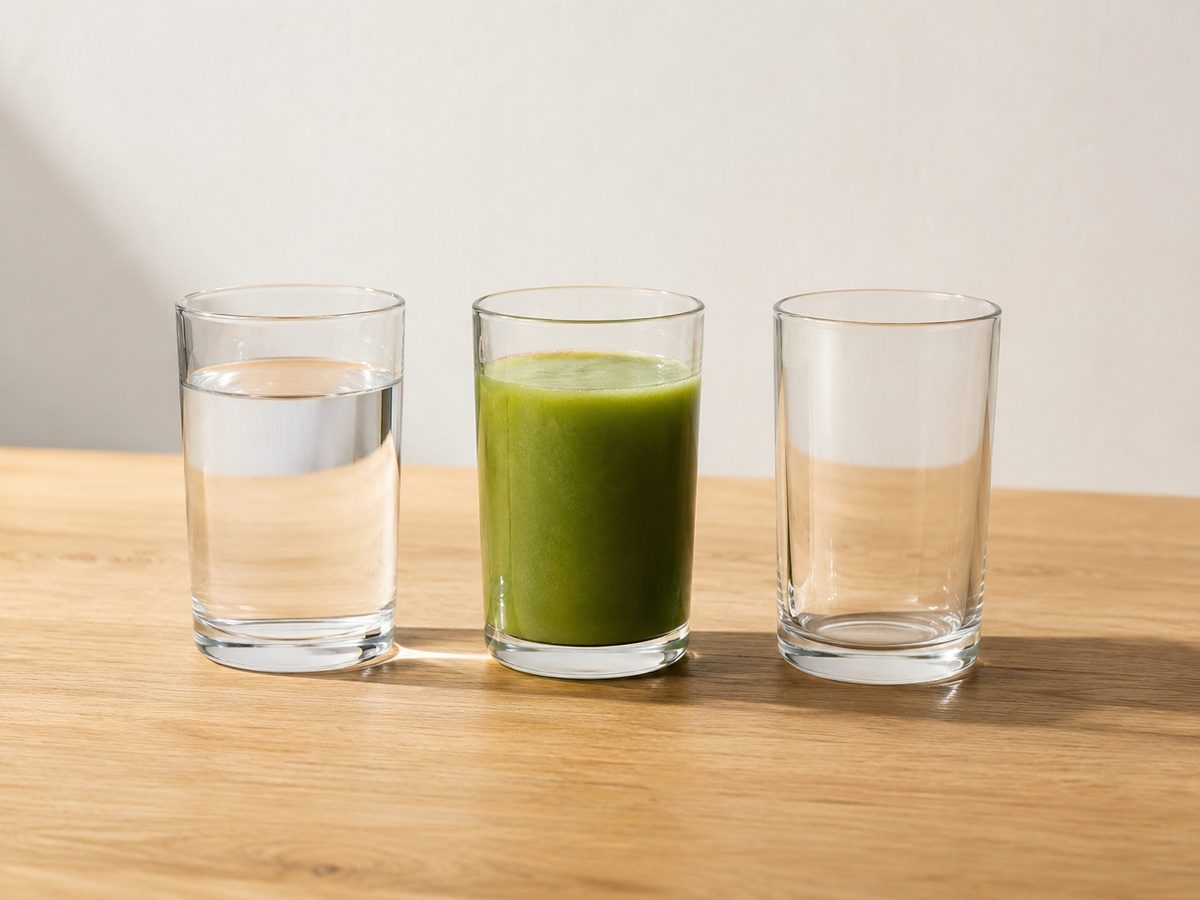
Fasting has moved from a fringe practice into mainstream health conversation over the past decade, but the word itself covers several genuinely different practices, with different mechanisms, different intensity levels, and different levels of risk. Water fasting, juice fasting, and dry fasting get used almost interchangeably in casual conversation, when they’re quite different experiences with different appropriate applications.
Juice Fasting, Explained
Juice fasting, sometimes called juice cleansing, involves consuming only fresh vegetable and fruit juice for a set period, while avoiding solid food entirely. It’s the gentlest of the three approaches covered here, since juice still provides meaningful calories, natural sugars, vitamins, minerals, and hydration throughout the fast. The digestive system gets a real break from processing solid food, but the body isn’t operating in a true calorie-deprived state the way it is during water or dry fasting.
This makes juice fasting the most accessible entry point for someone new to fasting, since blood sugar swings, while present, tend to be more moderate than a true zero-calorie fast, and the risk of dangerous complications is comparatively low for most healthy adults. It’s also the easiest of the three to sustain for multiple days without significant medical supervision, though it still isn’t appropriate for everyone, particularly anyone managing diabetes or blood sugar regulation issues.
Water Fasting, Explained
Water fasting means consuming nothing but water, no juice, no calories of any kind, for a defined period. This is a true fast in the strictest physiological sense, and the body’s metabolic state shifts significantly as a result. Within roughly twelve to twenty-four hours, glycogen stores become depleted, and the body shifts into ketosis, burning fat for fuel instead of glucose. Autophagy, the cellular process of breaking down and recycling damaged components, increases meaningfully during water fasting, more so than during a juice fast, since there’s no incoming caloric intake at all to interrupt the process.
Water fasting produces more pronounced effects than juice fasting, both the potential benefits researchers have studied around autophagy and metabolic flexibility, and the potential risks, including more significant blood sugar drops, electrolyte imbalances, dizziness, and fatigue. Extended water fasts, beyond a day or two, generally warrant medical supervision, particularly for anyone with an existing health condition, since the body’s stress response and electrolyte balance can shift meaningfully the longer a true fast continues.
Dry Fasting, Explained
Dry fasting is the most intense of the three, involving abstaining from both food and water for a set period. Proponents describe two forms, soft dry fasting, which allows contact with water for washing or bathing, and hard dry fasting, which avoids water contact entirely. The claimed rationale behind dry fasting is that it forces the body into an even deeper state of cellular stress response and autophagy than water fasting alone, since the body has to draw on its own internal water reserves rather than replenishing from an external source.
This is also, by a wide margin, the riskiest of the three practices. Dehydration can develop quickly and become dangerous within a day or two, particularly in warm climates or for anyone engaging in physical activity during the fast. The research base behind dry fasting specifically is far thinner than the research supporting water or juice fasting, most of what circulates in wellness spaces is anecdotal or drawn from religious and cultural fasting traditions rather than controlled clinical study. Given the genuine risk of rapid, dangerous dehydration, dry fasting deserves significantly more caution than the other two approaches, and isn’t something to attempt without real preparation, a strong understanding of personal risk factors, and ideally professional guidance.
What Happens Physiologically at Each Stage
Understanding the timeline helps explain why these three practices diverge so much in intensity. In the first eight to twelve hours of not eating, regardless of which type of fast is underway, the body is still primarily using glucose from recently digested food and readily available glycogen. Somewhere between twelve and twenty-four hours, glycogen stores become meaningfully depleted, and the body starts shifting toward fat metabolism and ketone production. This is the window where water fasting and juice fasting begin to diverge sharply, since juice fasting continues supplying incoming glucose that delays or moderates this shift, while water fasting allows it to proceed uninterrupted.
Beyond twenty-four hours of water or dry fasting, autophagy activity continues increasing, and the body’s stress hormone response, including cortisol, tends to rise as part of the physiological adaptation to sustained calorie absence. This is also the window where risks climb most noticeably, electrolyte imbalances, more significant blood sugar drops for anyone with underlying regulation issues, and, for dry fasting specifically, meaningful dehydration risk that can develop faster than most people expect, particularly in warm conditions or with any physical activity.
Signs a Fast Should Be Stopped
Regardless of which type is underway, certain signs indicate a fast should end immediately rather than being pushed through. Significant dizziness or fainting, a racing or irregular heartbeat, severe headache, confusion or difficulty concentrating beyond normal mild fogginess, and any signs of significant dehydration, dark urine, extreme thirst, dry mouth that doesn’t resolve, all warrant stopping the fast and, if symptoms are severe, seeking medical attention. Fasting is meant to be a controlled physiological stressor, not an endurance test, and treating early warning signs as something to push through rather than respect is where genuine harm tends to happen.
A Brief History
Fasting in some form predates recorded history, appearing across nearly every major religious and cultural tradition, Ramadan’s daytime fasting in Islam, Yom Kippur’s fast in Judaism, Lent’s traditional fasting practices in Christianity, and extended fasting periods in Buddhist and Hindu traditions among many others. These traditional fasts were rarely framed primarily as health interventions the way modern fasting is discussed, but as spiritual and disciplinary practices, even though many of the physiological effects overlap with what modern researchers now study directly.
Modern scientific interest in fasting’s metabolic effects accelerated significantly starting in the 2010s, with researcher Yoshinori Ohsumi winning the 2016 Nobel Prize in Physiology or Medicine specifically for his work identifying the mechanisms of autophagy, research that gave the modern fasting movement a genuine scientific foundation beyond tradition and anecdote. Intermittent fasting and time-restricted eating, gentler modern variations built around daily eating windows rather than multi-day fasts, grew rapidly in popularity following this research, offering a more accessible entry point into the same underlying mechanisms.
Comparing the Three Directly
Ranked from gentlest to most intense, juice fasting sits first, providing calories and hydration while still resting digestion. Water fasting sits in the middle, providing hydration but no calories, producing a genuine fasted metabolic state with meaningfully deeper autophagy than juice fasting alone. Dry fasting sits at the far end, providing neither calories nor water, and carries a substantially higher risk profile that isn’t matched by a proportionally stronger evidence base compared to water fasting.
The right choice, if any, depends heavily on individual goals, health status, and experience level. Someone new to fasting of any kind is almost always better served starting with juice fasting or a shorter water fast, under reasonable guidance, rather than jumping directly into an extended water fast or any form of dry fasting.
Who Should Avoid Fasting Entirely
Regardless of which type, certain groups should avoid fasting or only attempt it under direct medical supervision. This includes anyone with diabetes or blood sugar regulation issues, pregnant or breastfeeding individuals, anyone with a current or historical eating disorder, people who are underweight or malnourished, anyone taking medication that requires food intake, and people with certain chronic illnesses. Fasting is a real physiological stressor, and for these groups specifically, the risk profile shifts substantially compared to a generally healthy adult.
How This Fits Into the 9 Pillars
Fasting touches Food and Water directly, and its effects ripple into Rest and Thought as well, given how significantly a fasted state can affect sleep, mood, and mental clarity, sometimes positively and sometimes negatively depending on the individual and the specific type of fast attempted. Approaching it as one tool within a broader framework, rather than a standalone solution, keeps expectations realistic.
How This Works Into What I Offer
The CHN Detox Program covers fasting guidance directly, including beginner, intermediate, and advanced options, so the approach can match your actual experience level rather than jumping into something more intense than is appropriate. Explore it at certifiedhealthnut.com/online-courses/chn-detox-program.
What to Do Next
If you’re new to fasting, start with a short juice fast or a partial day of water fasting before considering anything longer or more intense, and talk to a doctor first if you have any underlying health condition. For structured, level-appropriate fasting guidance, explore the CHN Detox Program at certifiedhealthnut.com/online-courses/chn-detox-program, or reach out through certifiedhealthnut.com with questions.
Frequently Asked Questions
What is the actual difference between juice, water and dry fasting?
Juice fasting means consuming only fresh vegetable and fruit juice and no solid food, so calories, natural sugars, vitamins, minerals and hydration keep coming in. Water fasting means nothing but water and no calories of any kind, which is a true fast in the strictest physiological sense. Dry fasting means abstaining from both food and water, and is the most intense of the three.
Which type of fast should a beginner start with?
Juice fasting is the most accessible entry point. Blood sugar swings tend to be more moderate than in a true zero-calorie fast, and the risk of dangerous complications is comparatively low for most healthy adults. Someone new to fasting is almost always better served starting with juice fasting or a shorter water fast under reasonable guidance than jumping into an extended water fast or any form of dry fasting.
What happens in the body as a fast progresses?
In the first eight to twelve hours the body is still primarily using glucose from recently digested food and available glycogen. Somewhere between twelve and twenty-four hours glycogen stores become meaningfully depleted and the body shifts toward fat metabolism and ketone production. Beyond twenty-four hours of water or dry fasting, autophagy activity continues increasing and the stress hormone response including cortisol tends to rise, which is also the window where risks climb most noticeably.
What are the signs a fast should be stopped immediately?
Significant dizziness or fainting, a racing or irregular heartbeat, severe headache, confusion or difficulty concentrating beyond normal mild fogginess, and any signs of significant dehydration such as dark urine, extreme thirst or a dry mouth that does not resolve. Fasting is meant to be a controlled physiological stressor, not an endurance test, and pushing through early warning signs is where genuine harm tends to happen.
Who should avoid fasting altogether?
Anyone with diabetes or blood sugar regulation issues, pregnant or breastfeeding individuals, anyone with a current or historical eating disorder, people who are underweight or malnourished, anyone taking medication that requires food intake, and people with certain chronic illnesses should avoid fasting or only attempt it under direct medical supervision.