
Most fitness programs are built around two things: muscles and joints. Fascia, the connective tissue that wraps around and connects nearly everything else in the body, rarely gets mentioned, despite playing a direct role in mobility, pain, and how efficiently the whole system moves together. Functional fascia fitness is built specifically to address this gap.
What Fascia Is
Fascia is a continuous web of connective tissue made primarily of collagen that surrounds muscles, bones, nerves, and organs, forming a three-dimensional network throughout the entire body rather than existing as separate, isolated structures the way muscles do. It’s often described using the analogy of an orange, where the individual segments represent muscles and the white membrane surrounding both the whole orange and each segment represents fascia, a single connected structure at multiple scales at once. This connectedness is exactly why fascia behaves so differently from muscle tissue in how it responds to training, injury, and daily movement patterns.
A Brief History
Fascia was long dismissed by much of mainstream anatomy as inert packaging material, structurally important for holding organs and muscles in place, but not considered functionally significant in its own right. This began changing significantly starting in the early 2000s, when researchers using improved imaging and dissection techniques began documenting fascia’s role in force transmission, proprioception, the body’s sense of its own position in space, and pain signaling, findings that shifted fascia from an overlooked structural afterthought to an active area of research in its own right. The First International Fascia Research Congress, held in 2007, marked a significant turning point, bringing together researchers from multiple disciplines to formally establish fascia science as a distinct field, and subsequent congresses have continued building the evidence base connecting fascia health to mobility, pain, and athletic performance.
Why Most Workouts Ignore It
Traditional strength training is built around isolating specific muscles or muscle groups, a bicep curl, a leg extension, a bench press, each targeting a defined muscle with a defined range of motion. This approach builds real strength, but it doesn’t train the fascia’s role in connecting movement across the whole body, the way force transmits through fascial lines during complex, multi-directional real-world movement rather than the single-plane movement most gym equipment is designed around. Fascia responds specifically to varied, multi-directional loading, twisting, bending, reaching in unusual planes of motion, the kind of movement that isolated strength training rarely includes by design.
What Happens When Fascia Is Neglected
Fascia that isn’t regularly stretched, mobilized, and loaded through varied movement tends to become stiffer and less elastic over time, sometimes described as fascial adhesions or restrictions, areas where the tissue’s normal glide and elasticity has been reduced. This shows up practically as reduced range of motion that doesn’t trace back to any specific muscle tightness, a general sense of stiffness that persists despite regular stretching, and, in some cases, pain that doesn’t correlate clearly with any specific joint or muscle injury, since fascial restriction can refer pain to areas some distance from the actual restricted tissue, a pattern that often confuses standard diagnostic approaches focused on isolated structures.
How Functional Fascia Training Differs
Rather than isolating single muscles through fixed, single-plane movements, functional fascia training emphasizes movement that flows across multiple joints and directions at once, closer to how the body moves through daily life and sport. This includes multi-directional stretching that moves through several planes rather than a single static stretch position, dynamic movement patterns that combine rotation, reaching, and shifting weight rather than isolated repetitions, and controlled, springy or bouncing movements that specifically load fascia’s elastic properties, since fascia, unlike muscle, has genuine spring-like recoil capacity when trained appropriately, storing and releasing energy efficiently the way a tendon does.
Practical Ways to Train Fascia
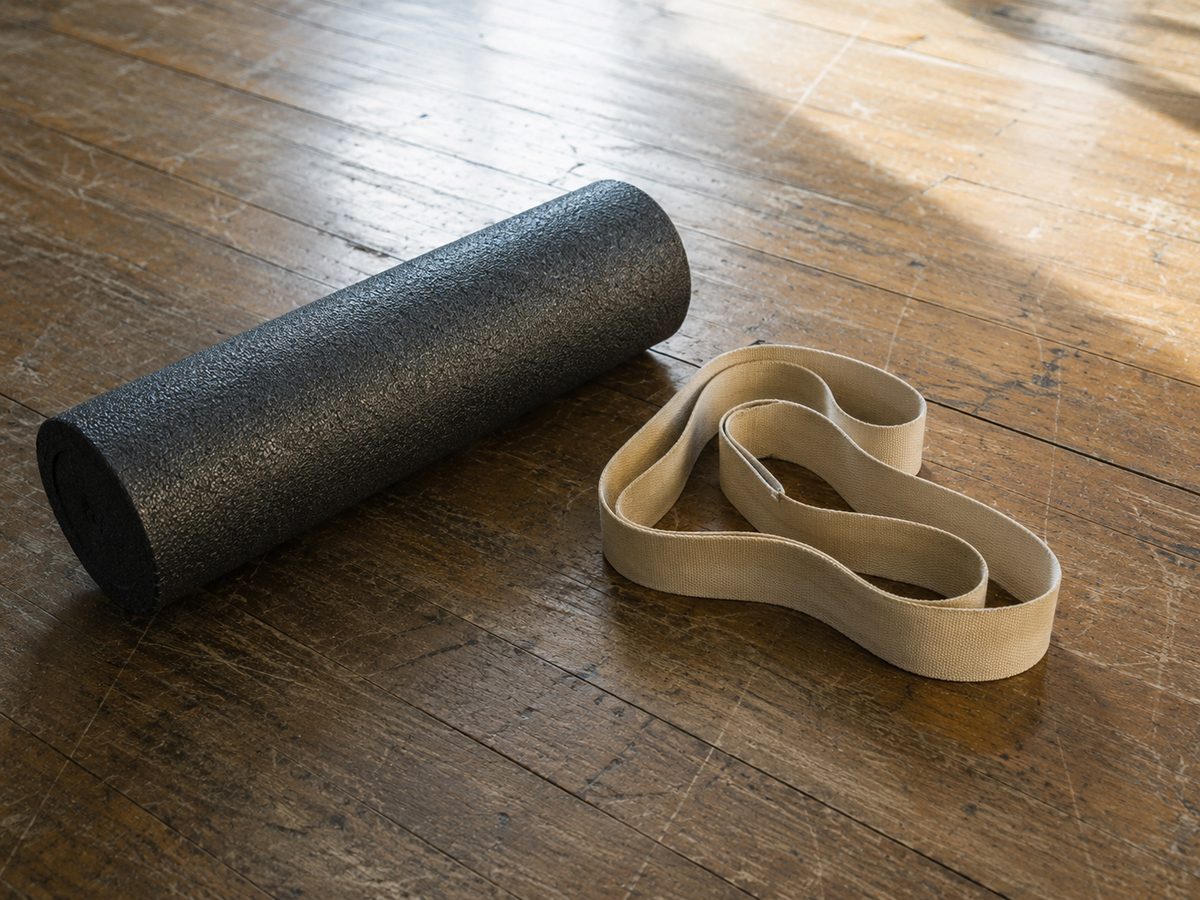
Foam rolling and self-myofascial release are among the more accessible entry points, applying sustained pressure to help release fascial restrictions and improve tissue glide, best used before or after training rather than as a substitute for it. Dynamic, multi-directional warm-ups, moving through rotation, reaching, and varied planes before a workout rather than only static stretching, prepare fascia for the demands of training more effectively than isolated stretching alone. Movement practices like Qigong and certain yoga styles that emphasize flowing, connected movement across the whole body train fascial function inherently, even without labeling it that way explicitly. And bouncing or springy movements, done with control, like light jump rope work or plyometric drills appropriate to someone’s fitness level, specifically train the elastic, energy-storing quality fascia is capable of when it’s healthy and well-trained.
Who Benefits Most
Anyone dealing with stiffness or pain that doesn’t respond well to typical muscle-focused stretching and strengthening is a strong candidate for adding fascia-specific work into a routine. Athletes in sports requiring quick, multi-directional movement, tennis, basketball, martial arts, tend to benefit significantly from fascial training given how directly it supports the kind of elastic, connected movement those sports demand. And anyone recovering from a period of significant inactivity, where fascia has had time to stiffen without regular varied movement, often finds fascia-focused work a useful bridge back into fuller mobility before returning to more intense, isolated strength training.
How This Fits Into the 9 Pillars
Functional fascia fitness sits inside Movement, but it represents a more complete, whole-body approach to that pillar than isolated muscle training alone provides, connecting more directly to how the body functions as an integrated system rather than a collection of separate parts trained one at a time.
How This Works Into What I Offer
Functional Fascia Fitness is included as part of Fit and Free, built into the training approach alongside individualized coaching rather than treated as a separate, optional add-on. Explore Fit and Free at certifiedhealthnut.com/fit-and-free.
What to Do Next
Add five minutes of dynamic, multi-directional movement, gentle twisting, reaching, and rotating through different planes, before your next workout and notice how it feels compared to static stretching alone. For structured fascia-focused training built into a complete program, explore Fit and Free at certifiedhealthnut.com/fit-and-free, or reach out through certifiedhealthnut.com with questions.
Frequently Asked Questions
What is fascia?
Fascia is a continuous web of connective tissue made primarily of collagen that surrounds muscles, bones, nerves and organs, forming a three-dimensional network throughout the entire body rather than existing as separate, isolated structures the way muscles do. It is often described using the analogy of an orange, where the segments represent muscles and the white membrane surrounding both the whole orange and each segment represents fascia.
Why do most workouts ignore fascia?
Traditional strength training is built around isolating specific muscles through a defined range of motion, such as a bicep curl or a leg extension. That builds real strength but does not train fascia’s role in connecting movement across the whole body. Fascia responds specifically to varied, multi-directional loading, twisting, bending and reaching in unusual planes, the kind of movement isolated strength training rarely includes by design.
What happens when fascia is neglected?
Fascia that is not regularly stretched, mobilised and loaded through varied movement tends to become stiffer and less elastic over time, sometimes described as fascial adhesions or restrictions. Practically this shows up as reduced range of motion that does not trace back to any specific muscle tightness, stiffness that persists despite regular stretching, and sometimes pain that does not correlate clearly with any joint or muscle injury, since fascial restriction can refer pain some distance from the restricted tissue.
How is fascia training different from normal strength work?
Rather than isolating single muscles through fixed, single-plane movements, functional fascia training emphasises movement flowing across multiple joints and directions at once. That includes multi-directional stretching through several planes, dynamic patterns combining rotation, reaching and shifting weight, and controlled springy movements that load fascia’s elastic properties, since fascia has genuine spring-like recoil capacity when trained appropriately.
Who benefits most from fascia-specific work?
Anyone dealing with stiffness or pain that does not respond well to typical muscle-focused stretching and strengthening. Athletes in sports requiring quick, multi-directional movement such as tennis, basketball and martial arts benefit significantly. And anyone recovering from a period of significant inactivity, where fascia has had time to stiffen, often finds fascia-focused work a useful bridge back into fuller mobility before returning to more intense strength training.