
I’m not a doctor. This post is general education, not medical advice, and it’s not a diagnosis or treatment plan. Chronic inflammation is a real, measurable physiological state connected to a wide range of health conditions, and if you’re concerned about it, the right step is bloodwork and a conversation with a doctor, not guessing based on symptoms or assuming a supplement will fix an underlying process that needs real evaluation.
Inflammation comes up constantly across health research, connected to arthritis, skin conditions, chronic pain, cholesterol patterns, and even depression and chronic stress. Like stress, inflammation isn’t confined to one topic. It’s a thread running underneath a huge portion of modern chronic disease, which is exactly why it deserves its own dedicated explanation rather than staying a word I keep gesturing toward without fully unpacking.
What Inflammation Is
Inflammation, at its core, is your immune system’s response to injury, infection, or anything it identifies as a threat. Acute inflammation, the short-term kind, is protective and genuinely essential to survival. Cut your finger, and the redness, heat, swelling, and pain you see are your immune system rushing resources to the site, clearing damaged tissue and pathogens, and beginning the repair process. This kind of inflammation resolves once its job is done, usually within days.
Chronic inflammation is different. It’s a persistent, low-grade immune activation that doesn’t fully resolve, often without the obvious signs of acute inflammation, no redness or swelling you can see, just an immune system that stays partially activated throughout the body over months or years. This involves ongoing release of signaling molecules called cytokines, chemical messengers that coordinate immune activity, at levels elevated enough to affect tissue and organ function over time, even though nothing looks visibly wrong on the surface.
One of the more common ways doctors assess this is a blood marker called C-reactive protein, or CRP, produced by the liver in response to inflammatory signals in the body. Elevated CRP on a blood panel is one of the more accessible, common ways to get an actual measurement of your inflammatory status, rather than guessing based on how you feel, since chronic inflammation often produces no obvious symptoms at all until it’s contributed to something more serious.
Chronic inflammation is also closely tied to a related process called oxidative stress, an imbalance between free radicals, unstable molecules that can damage cells, and antioxidants, which neutralize them. The two processes feed each other, inflammation generates more free radicals, and oxidative stress can trigger more inflammatory signaling, creating a cycle that, left unaddressed, tends to reinforce itself over time.
A Brief History
The basic signs of inflammation, redness, heat, swelling, and pain, were first documented nearly two thousand years ago by the Roman scholar Celsus, a description still referenced in medical education today. For most of medical history, inflammation was understood only in its acute, visible form, the kind that follows an injury or infection. The concept of chronic, low-grade inflammation as a distinct, measurable driver of disease is far more recent, gaining serious research attention starting in the 1990s and 2000s as scientists developed a clearer understanding of cytokines and markers like C-reactive protein, and their connection to cardiovascular and metabolic disease.
Why Some People Get Chronic Inflammation
Diet is one of the more direct, well-documented drivers. Diets high in refined sugar, refined carbohydrates, and processed foods are consistently associated with elevated inflammatory markers in research. Trans fats specifically have one of the more clearly documented inflammatory effects of any dietary component, part of why they’ve been phased out of much of the food supply. The balance between omega-6 and omega-3 fatty acids matters too. Both are essential, but modern diets, heavy in vegetable oils and processed food, tend to run disproportionately high in omega-6 relative to omega-3, and that imbalance is associated with a more pro-inflammatory internal state, compared to diets with a more balanced ratio between the two.
Excess body fat, particularly visceral fat around the organs, functions as an active inflammatory tissue, not just stored energy. Fat cells, especially visceral fat, produce inflammatory cytokines directly, which is part of why excess weight is connected to elevated inflammation independent of diet quality, and why weight and inflammation show up together so consistently across the research on cardiovascular disease, diabetes, and several other conditions covered here.
Chronic stress drives inflammation through a direct hormonal pathway, covered in more depth in my post on chronic stress. Cortisol, in short bursts, suppresses inflammation, which is part of why it’s used medically in that form. But chronically elevated cortisol, the kind that comes with sustained stress, eventually leads to a phenomenon called cortisol resistance, where immune cells become less responsive to cortisol’s regulating signal, resulting in more inflammation, not less, despite the elevated cortisol still being present.
Poor sleep is independently associated with elevated inflammatory markers, even after accounting for other factors like weight and diet. A single night of significantly restricted sleep has been shown in research to measurably raise inflammatory markers the following day, and chronic poor sleep sustains that elevation over time.
A sedentary lifestyle contributes to chronic low-grade inflammation, while regular, moderate physical activity has a well-documented anti-inflammatory effect, one of the more consistent findings in exercise research. This relationship isn’t perfectly linear, though, and I’ll come back to that nuance later in this post.
Smoking is one of the more directly damaging inflammatory exposures a person can have, triggering sustained immune activation throughout the body, well beyond just the respiratory system.
Gut health plays a real, increasingly researched role, connected to the gut-brain and gut-skin axes. An imbalanced gut microbiome and increased intestinal permeability, sometimes informally called leaky gut, may allow bacterial components to enter the bloodstream in ways that trigger a low-grade immune response, an area of genuinely active research rather than fully settled science, but one with real, growing evidence behind it.
Environmental toxin exposure is a real, underappreciated contributor. I’ve written before about mold exposure specifically, and inflammatory response is a core part of how the body reacts to mycotoxins, which is part of why the fatigue, brain fog, and respiratory symptoms I experienced during my own mold exposure fit squarely into an inflammatory picture. Air pollution, certain chemical exposures, and heavy metal exposure are all independently associated with elevated inflammatory markers as well.
Chronic infections, even low-grade ones a person might not be fully aware of, can sustain ongoing immune activation. Some research has connected certain chronic viral and bacterial infections to elevated long-term inflammation, part of the broader picture of why unexplained, persistent inflammation sometimes warrants investigation beyond diet and lifestyle alone.
Autoimmune conditions represent chronic inflammation driven by the immune system attacking the body’s own tissue directly, as with rheumatoid and psoriatic arthritis, though the same underlying mechanism applies to a range of other autoimmune conditions as well.
Aging itself is associated with a gradual rise in baseline inflammation, a pattern researchers have started calling inflammaging, a genuine, documented phenomenon where inflammatory markers tend to climb gradually over the decades even in people without an obvious identifiable cause, likely connected to cumulative cellular damage and a less efficiently regulated immune system over time.
What Chronic Inflammation Is Associated With
I want to be careful with my language here, since this is an area where it’s easy to overstate causation. Chronic inflammation is associated with, and believed to contribute to, a wide range of conditions covered throughout this post, cardiovascular disease, type 2 diabetes, several forms of arthritis, certain skin conditions, and it’s increasingly implicated in depression and cognitive decline as well, an area of genuinely active current research. This doesn’t mean inflammation is the sole cause of any of these conditions, most have several contributing factors, but it does mean inflammation is frequently part of the underlying picture, which is exactly why addressing it tends to support such a broad range of health markers at once rather than just one narrow outcome.
Common Foods Worth Knowing About, in Both Directions
It’s worth naming some specific foods on both sides of this equation, since general advice to “eat anti-inflammatory” without concrete examples doesn’t give you much to act on.
On the side that tends to promote inflammation, sugar-sweetened beverages have some of the more consistent research behind them, given how directly and repeatedly they spike blood sugar throughout the day. Refined grains, white bread, white rice, and most packaged baked goods, behave similarly to added sugar in terms of blood sugar impact, despite not tasting sweet. Processed meats, hot dogs, deli meat, and bacon among them, are associated with elevated inflammatory markers in multiple large studies, more consistently than unprocessed red meat, which shows a weaker and more debated association. Fried foods, particularly when the oil has been reused or heated to high temperatures repeatedly, generate compounds directly linked to oxidative stress and inflammation.
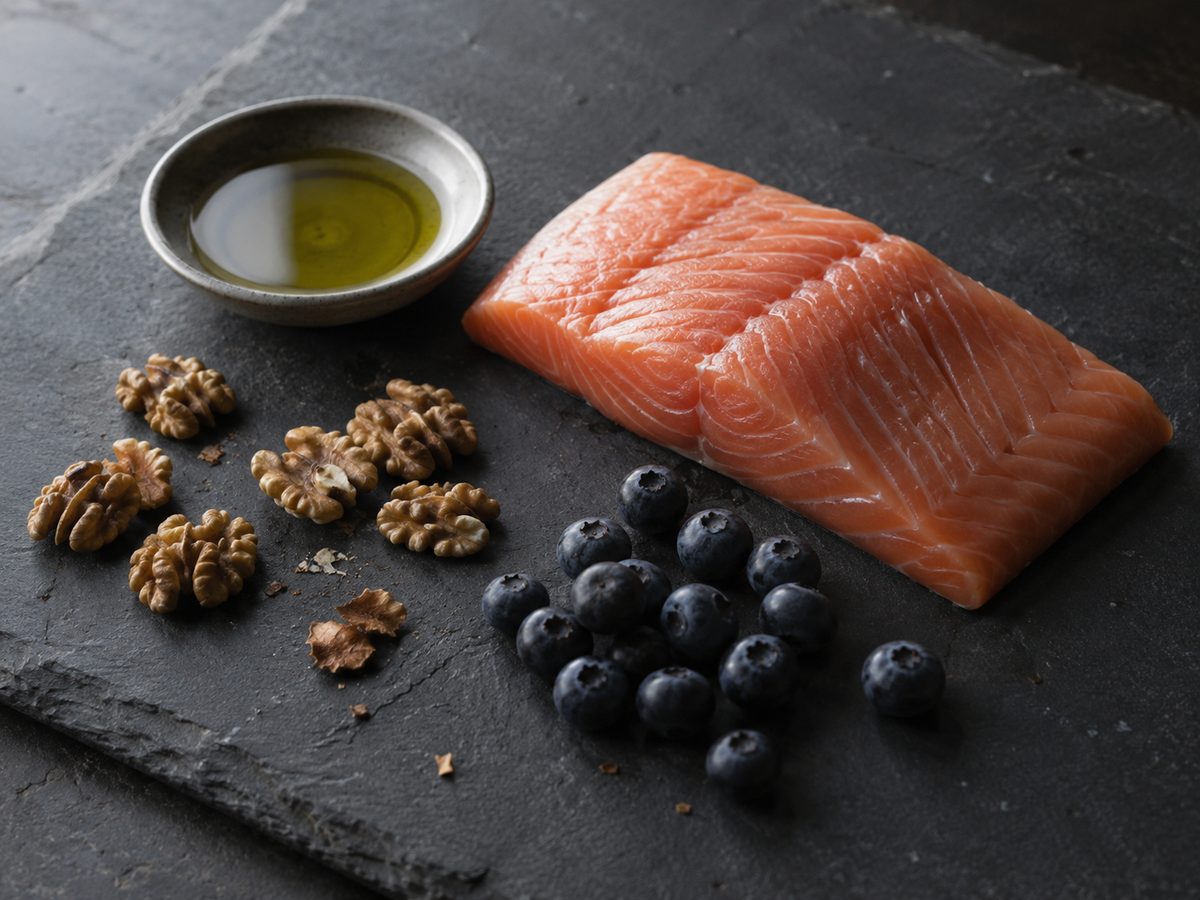
On the supportive side, fatty fish like salmon, sardines, and mackerel provide concentrated omega-3s directly. Extra virgin olive oil has real, specific research behind its anti-inflammatory compounds, distinct from many other cooking oils. Leafy greens, berries, and cruciferous vegetables like broccoli and Brussels sprouts provide a dense concentration of the polyphenols and antioxidants mentioned earlier. Nuts and seeds, particularly walnuts and flaxseed, contribute both healthy fats and fiber. And fermented foods, yogurt, kefir, sauerkraut, and similar options, may offer additional support through their connection to gut health, though individual tolerance varies, similar to the pattern seen with other digestive triggers.
None of this requires perfection or eliminating entire food groups. The overall pattern, more of the second list, less of the first, consistently repeated over months and years, is what shows up in research, not any single meal or any single ingredient treated in isolation.
Natural Approaches That Support Healthy Inflammation Levels
Building meals around whole, minimally processed foods is one of the more direct dietary levers available. Diets emphasizing vegetables, fruits, whole grains, legumes, and healthy fats, while limiting refined sugar, refined carbohydrates, and processed food, are consistently associated with lower inflammatory markers across a large body of research, more so than any single “superfood” or supplement.
Prioritizing omega-3 fatty acids, and rebalancing the omega-6 to omega-3 ratio, has real, direct research support. Fatty fish, walnuts, flaxseed, and chia seeds provide omega-3s directly, while reducing reliance on many common vegetable oils high in omega-6 helps shift the overall balance in a less inflammatory direction.
Colorful fruits and vegetables provide polyphenols and antioxidants that directly support the body’s ability to manage oxidative stress, the process so closely tied to inflammation covered earlier. Berries, leafy greens, and a genuinely varied, colorful produce intake, rather than relying on the same few vegetables repeatedly, tends to provide a broader range of these protective compounds.
Regular, moderate movement has one of the more consistent anti-inflammatory effects in all of exercise research, but the relationship has real nuance worth understanding. Moderate, consistent activity lowers baseline inflammation over time. Extremely intense, prolonged exercise without adequate recovery, though, can temporarily spike inflammatory markers, and chronic overtraining without sufficient rest is associated with sustained elevation rather than the reduction seen with more moderate, sustainable activity levels. More isn’t automatically better here, which fits the same pattern seen with pain management and hormone regulation.
Prioritizing quality sleep directly supports the nightly regulation of inflammatory markers. Consistent, adequate sleep is one of the more foundational, underappreciated anti-inflammatory tools available, given how directly and measurably sleep restriction raises inflammation even in otherwise healthy people.
Managing chronic stress addresses the cortisol resistance pathway directly, not as a general wellness suggestion, but as a targeted intervention on one of the actual mechanisms driving sustained inflammation. Breathwork, meditation, and consistent nervous system regulation practice genuinely support healthier inflammatory regulation over time.
Maintaining a healthy body composition reduces the inflammatory load coming directly from visceral fat tissue. This is one of the more directly modifiable pieces of the whole picture, given how clearly excess visceral fat functions as active inflammatory tissue rather than passive storage.
Supporting gut health through fiber-rich, diverse whole foods may help address the intestinal permeability piece of this picture, though this remains an evolving area of research rather than a fully settled mechanism.
Reducing environmental toxin exposure where realistically possible supports lower inflammatory burden. This includes addressing mold exposure directly if it’s present in your living space, reducing unnecessary exposure to air pollution where you have some control over it, and being thoughtful about chemical exposure in cleaning products and personal care items.
Quitting smoking produces measurable reductions in inflammatory markers, and the improvement begins within weeks of quitting, one of the more encouraging, faster-acting changes available on this entire list.
Getting adequate sunlight exposure supports healthy vitamin D levels, which play a real role in immune regulation. Vitamin D deficiency is associated with elevated inflammatory markers in research, and correcting a genuine deficiency, identified through bloodwork rather than assumed, can meaningfully support healthier immune function.
A Word on Anti-Inflammatory Medication
I want to address something directly, since it’s relevant here in a way it hasn’t been elsewhere in this post. Over-the-counter anti-inflammatory medications, like ibuprofen and naproxen, work by directly suppressing inflammatory pathways, and they have a real, legitimate place for acute pain and short-term use under appropriate guidance. Using them as a long-term, unsupervised workaround for chronic inflammation, though, isn’t the same as addressing the underlying drivers, and regular long-term use of these medications carries its own real risks, including to the digestive tract and kidneys, that are worth a genuine conversation with a doctor rather than an assumption that “natural” or “over the counter” both mean risk-free with unlimited daily use.
How This Fits Into the 9 Pillars
Inflammation touches nearly every pillar at once, Food, Movement, Rest, Thought, Water, and Nature all play a direct, documented role in either driving or resolving chronic inflammation. Like chronic stress, this isn’t a topic that responds well to a single fix, one supplement, one anti-inflammatory food, layered onto an otherwise unchanged pattern rarely moves the needle the way addressing the whole system does.
How This Works Into What I Offer
The lifestyle side of inflammation support runs through the same coaching structure as everything covered here.
The Real Ones offers community, weekly live support led by Certified Healthnut Coaches, group breathwork on Saturday mornings and a guided Silent Sit with Troy on Sunday mornings, Chi Gong practice on Tuesday and Saturday mornings, and breathwork training. Given how directly chronic stress drives inflammation through the cortisol resistance pathway, these nervous system regulation practices address a real mechanism here, not just a general wellness benefit layered on top.
Fit and Free adds weekly live coaching directly with me, a dedicated Mindset and Breathwork coaching call, guided detox support, and real workout plan and nutrition guidance. This is where anti-inflammatory nutrition patterns, appropriate movement without tipping into overtraining, and weight management all get real, individualized coaching and accountability, rather than staying general information you’re left to apply alone.
The Legacy Method includes a private one-on-one deep dive session with me and ongoing personal mentorship through the full eleven weeks. For inflammation tangled up with weight, chronic stress, sleep, environmental exposure, or other factors, that level of individualized attention lets the coaching address your full pattern, working alongside whatever bloodwork and medical guidance is part of your picture.
None of this replaces bloodwork or medical evaluation, particularly if inflammation is connected to an autoimmune condition, a chronic infection, or another issue requiring specific medical treatment. What it offers is the daily structure and accountability that makes the lifestyle side of inflammation support genuinely sustainable, working alongside whatever medical care your specific picture requires.
When to See a Doctor
If you’re dealing with persistent, unexplained symptoms, fatigue, joint pain, digestive issues, or skin changes, and suspect inflammation might be playing a role, ask your doctor about testing markers like CRP as part of a broader evaluation, rather than assuming based on symptoms alone or trying to self-treat with supplements first. If inflammation is elevated on bloodwork without an obvious explanation, further evaluation may be warranted to identify an underlying cause, whether that’s an infection, an autoimmune condition, or another issue that needs its own specific treatment path.
The Bigger Point
Chronic inflammation isn’t a single condition, and it isn’t something a single anti-inflammatory food or supplement resolves on its own, however it gets marketed. It’s a genuine physiological state, driven by diet, weight, stress, sleep, movement, and environmental exposure all at once, and it sits underneath a remarkable number of the conditions covered across this blog.
Support it the same way you’d support any whole-system process, with real food, real movement, real sleep, and real stress management, working together rather than in isolation. And when something feels genuinely off, get real bloodwork rather than guessing, since inflammation, more than almost any other health marker, tends to hide in plain sight until it’s measured directly.
What to Do Next
Ask your doctor about testing markers like CRP if you suspect chronic inflammation may be part of what you’re dealing with, rather than guessing based on symptoms. For the nutrition and movement side covered in this post, the 90 Day Cleanse at certifiedhealthnut.com/cleanse and Fit and Free at certifiedhealthnut.com/fit-and-free both address it directly. Reach out through certifiedhealthnut.com with any questions.
Frequently Asked Questions
What is the difference between acute and chronic inflammation?
Acute inflammation is protective and essential to survival. Cut your finger and the redness, heat, swelling and pain are your immune system rushing resources to the site, clearing damaged tissue and beginning repair, and it resolves once its job is done, usually within days. Chronic inflammation is persistent, low-grade immune activation that does not fully resolve, often without any visible signs, involving ongoing release of signalling molecules called cytokines at levels high enough to affect tissue and organ function over months or years.
How would I know if I have chronic inflammation?
Often you would not, which is exactly the problem. Chronic inflammation frequently produces no obvious symptoms until it has contributed to something more serious. One of the more common ways doctors assess it is a blood marker called C-reactive protein, or CRP, produced by the liver in response to inflammatory signals. Asking your doctor about testing markers like CRP as part of a broader evaluation is more useful than guessing based on symptoms or self-treating with supplements.
What drives chronic inflammation?
Diets high in refined sugar, refined carbohydrates and processed foods, along with a high omega-6 to omega-3 ratio. Excess visceral fat, which functions as active inflammatory tissue rather than passive storage. Chronic stress, through cortisol resistance. Poor sleep, which raises inflammatory markers measurably even after a single restricted night. A sedentary lifestyle, smoking, gut imbalance, environmental toxin exposure including mold, chronic low-grade infections, autoimmune conditions, and a gradual age-related rise researchers call inflammaging.
Which foods promote inflammation and which help?
On the promoting side: sugar-sweetened beverages, refined grains such as white bread and white rice, processed meats like deli meat and bacon, and fried foods, particularly when oil has been reheated repeatedly. On the supportive side: fatty fish such as salmon, sardines and mackerel, extra virgin olive oil, leafy greens, berries, cruciferous vegetables, nuts and seeds like walnuts and flaxseed, and fermented foods. The overall pattern repeated over months matters far more than any single meal or ingredient.
Can I just take ibuprofen for chronic inflammation?
Over-the-counter anti-inflammatories like ibuprofen and naproxen work by directly suppressing inflammatory pathways and have a legitimate place for acute pain and short-term use under appropriate guidance. Using them as a long-term, unsupervised workaround for chronic inflammation is not the same as addressing the underlying drivers, and regular long-term use carries real risks including to the digestive tract and kidneys that deserve a genuine conversation with a doctor.