
Juice cleanses get talked about constantly in wellness circles, and just as often dismissed as a fad by critics who assume it’s nothing more than drinking vegetables for a few days and calling it detox. Neither the hype nor the dismissal tells the full story. Understanding what happens in the body during a juice cleanse, step by step, makes it possible to evaluate the practice on its real merits rather than on marketing claims or knee-jerk skepticism.
What a Juice Cleanse Is
A juice cleanse involves replacing regular meals, for a defined period, typically anywhere from one to several days, with fresh-pressed or cold-pressed juice made from vegetables and fruit, sometimes supplemented with herbs. Unlike a smoothie, which retains the fiber of the whole produce, juice separates the liquid, containing vitamins, minerals, and plant compounds, from the fiber and pulp, which gets removed in the pressing process. This distinction matters, since it changes how quickly the nutrients are absorbed and how the digestive system handles the intake compared to eating the same produce whole.
A Brief History
Juicing as a wellness practice traces back to the early 20th century, with Norman Walker, an early advocate, developing and patenting one of the first mechanical juicers in the 1930s and promoting fresh vegetable juice as a health practice for decades afterward. The modern juice cleanse industry, with its packaged, multi-day programs, developed much later, expanding significantly starting in the 2000s alongside the broader wellness and detox industry. Fasting itself, which juice cleansing is a modified, gentler version of, has a far older history, appearing in religious and medical traditions across cultures for thousands of years, generally understood even in ancient texts as a period of reduced intake that gave the digestive system a break from its usual workload.
Step One: What Happens in the First Few Hours
Once regular food intake stops and juice becomes the only source of calories, the digestive system’s workload changes almost immediately. Solid food requires significant mechanical and enzymatic digestion, chewing, stomach acid, and hours of processing before nutrients are available for absorption. Juice, already broken down into liquid form, requires very little of this. Nutrients become available for absorption quickly, and the digestive system, freed from its usual heavy workload, has more capacity to direct toward other processes.
Blood sugar responds to this shift too. Juice, particularly fruit-forward blends, contains natural sugar that enters the bloodstream relatively quickly given the lack of fiber to slow absorption, which is part of why well-designed cleanses balance fruit with vegetable content and often include healthy fats or protein sources alongside the juice itself to moderate this response.
Step Two: What Happens Over the First One to Three Days
As the cleanse continues, the body shifts its primary fuel source. With significantly reduced calorie and carbohydrate intake compared to normal eating, glycogen stores, the body’s stored form of carbohydrate, begin to deplete over the first day or two. Once glycogen stores run low, the body increasingly shifts toward burning fat for fuel, a metabolic state that also triggers autophagy to some degree, the process by which cells break down and recycle damaged components, though the depth of this shift during a juice cleanse is more modest than during a longer water fast, since juice still provides meaningful caloric intake.
This period is also when most people notice initial symptoms, headaches, fatigue, and irritability being common, largely tied to reduced caffeine intake if that’s part of the change, along with the body adjusting to a different fuel source and lower overall calorie intake than usual.
Step Three: What Happens With Digestive Rest
With the digestive system handling a lighter, easier-to-process intake, many people report reduced bloating and a flatter stomach within the first few days, partly from reduced fiber bulk moving through the intestines and partly from reduced water retention as processed food and excess sodium intake drops. This digestive rest is often cited as one of the core rationales behind juice cleansing, the idea that giving the gut a lighter workload for a defined period allows other bodily processes, immune function, cellular repair, to receive resources that would otherwise go toward heavy digestion.
Step Four: What Happens With Hydration and Elimination
Fresh juice is overwhelmingly water by volume, which means hydration typically increases significantly during a cleanse compared to typical intake for many people. This supports kidney function directly, since adequate hydration is essential for the kidneys to filter and excrete waste products efficiently. Increased urination is common and expected during this period, reflecting both the higher fluid intake and the kidneys processing the nutrient load from the juice itself.
Step Five: What Happens When Reintroducing Food
How a cleanse ends matters as much as how it’s conducted. Reintroducing solid food too quickly, especially heavy, rich, or processed food, after several days of easily digested liquid intake can cause real digestive discomfort, since the digestive system needs a period to ramp back up its usual enzyme production and processing capacity. A gradual reintroduction, starting with easily digestible foods like soups, steamed vegetables, and light proteins before returning to a normal diet over a few days, tends to produce a smoother transition and helps preserve whatever benefit the cleanse period provided.
What the Evidence Supports
It’s worth being direct about where the research stands. Juice cleanses can support short-term hydration, provide a concentrated dose of vitamins, minerals, and plant compounds, and offer a psychological reset that helps some people break patterns of poor eating habits. What the evidence doesn’t support is the more dramatic marketing language sometimes used around cleanses, the idea that a few days of juice fundamentally detoxifies organs that already handle detoxification continuously as part of normal function, or that a short cleanse alone produces lasting metabolic change without follow-up changes to ongoing habits. The realistic value sits in the reset and the nutrient density, not in an exaggerated claim of flushing out toxins the body wasn’t already equipped to handle.
Who Should Be Cautious
Juice cleanses aren’t appropriate for everyone. People with diabetes or blood sugar regulation issues need real caution given the sugar content in fruit-forward juices and the risk of significant blood sugar swings. Pregnant or breastfeeding individuals, anyone with a history of disordered eating, and people managing certain medical conditions should talk to a doctor before attempting a multi-day cleanse. This isn’t a general population intervention to undertake casually without considering individual circumstances.
What Ingredients Make Up a Well-Designed Cleanse
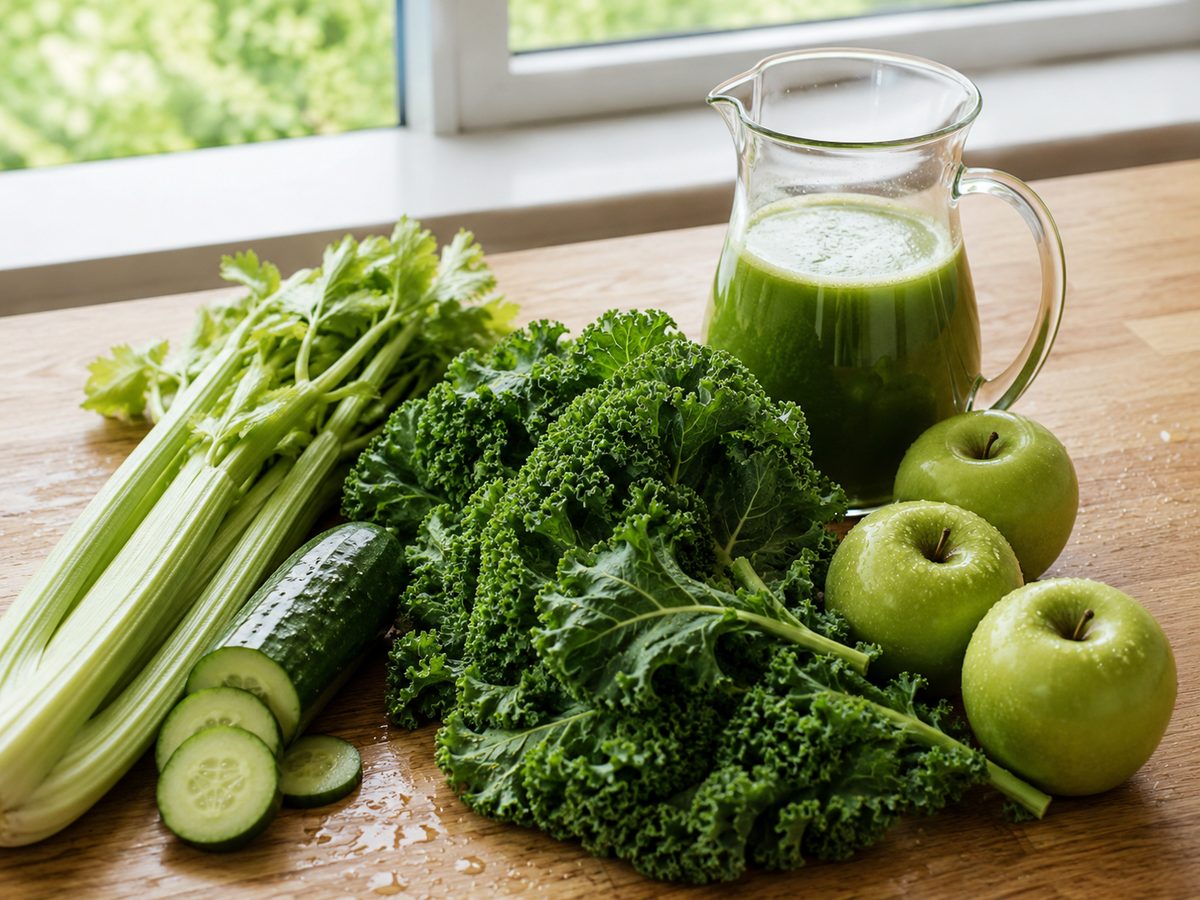
Not all cleanse juices are built the same way, and the ingredient balance matters more than people assume. A cleanse leaning heavily on fruit juice alone delivers a significant sugar load with relatively little to buffer it, producing more pronounced blood sugar swings and less sustained satiety. A better-designed cleanse balances leafy greens, cucumber, celery, and other lower-sugar vegetables as the base, with fruit used more sparingly for flavor and natural sweetness rather than as the dominant ingredient. Additions like ginger, lemon, and certain herbs are often included for their own supportive properties alongside flavor, ginger for digestive comfort, lemon for its vitamin C content and alkalizing effect on taste, though it’s worth being skeptical of any single ingredient marketed as having outsized, dramatic effects on its own.
Some cleanse programs also include a plant-based protein or healthy fat source, either blended into certain juices or offered as a separate small addition, specifically to moderate the blood sugar response and provide more sustained energy than juice alone delivers. This detail separates a thoughtfully constructed cleanse from one that’s essentially concentrated fruit sugar marketed with cleanse language attached.
What People Commonly Misunderstand
The word detox gets used loosely enough in marketing that it’s worth clarifying what a juice cleanse can and can’t reasonably claim to do. Your liver and kidneys handle the body’s actual detoxification continuously, processing and eliminating waste products around the clock regardless of what you’re eating. A juice cleanse doesn’t replace or dramatically supercharge this ongoing process. What it does is reduce the digestive burden competing for the body’s resources and flood the system with a concentrated dose of the vitamins, minerals, and antioxidants those organs use as part of their normal function, supporting the process rather than performing some separate, additional detox mechanism the body wouldn’t otherwise have.
Comparing a Juice Cleanse to Just Eating More Vegetables
A fair question worth addressing directly: why not just eat more vegetables instead of juicing them? Whole vegetables offer fiber, which juice removes, and fiber carries its own real benefits, supporting gut health, slowing sugar absorption, and contributing to satiety in a way juice can’t replicate. Juice’s advantage is volume and concentration. It’s genuinely difficult to eat the pound or more of produce that goes into a single serving of fresh juice, which means a cleanse period can deliver a density of plant nutrients that would be hard to match through whole-food eating alone over the same short window. The two aren’t competing approaches so much as different tools, and a complete nutritional pattern includes both, with juice serving a specific, temporary purpose rather than replacing whole produce as a daily habit.
How This Fits Into the 9 Pillars
A juice cleanse touches Food and Water most directly, offering a concentrated period of nutrient-dense intake and elevated hydration, but its real value connects to Thought as well, given how often a structured reset supports a psychological shift toward better habits going forward, provided it’s followed by sustained changes rather than a return to old patterns immediately afterward.
How This Works Into What I Offer
The 90 Day Cleanse is built around this same principle of nutrient-dense support rather than deprivation, extended into a longer, more sustainable structure than a short juice-only cleanse alone can provide. Explore it at certifiedhealthnut.com/cleanse.
What to Do Next
If you’re considering a juice cleanse, start with a short duration, one to three days, and pay close attention to how your body responds. For a longer, more structured reset built around sustained nourishment rather than a short-term liquid-only approach, explore the 90 Day Cleanse at certifiedhealthnut.com/cleanse, or reach out through certifiedhealthnut.com with questions.
Frequently Asked Questions
What actually happens in the body during a juice cleanse?
The digestive workload drops almost immediately, since juice requires very little of the mechanical and enzymatic digestion solid food does. Over the first one to three days glycogen stores deplete and the body shifts increasingly toward burning fat for fuel, triggering autophagy to some degree, though more modestly than a longer water fast since juice still provides calories. Most people notice headaches, fatigue and irritability in this window, largely tied to reduced caffeine and the shift in fuel source.
What does the evidence actually support?
Juice cleanses can support short-term hydration, provide a concentrated dose of vitamins, minerals and plant compounds, and offer a psychological reset that helps some people break poor eating patterns. What the evidence does not support is the idea that a few days of juice fundamentally detoxifies organs that already handle detoxification continuously, or that a short cleanse alone produces lasting metabolic change without follow-up habit changes.
Why not just eat more vegetables instead of juicing them?
Whole vegetables offer fiber, which juice removes, and fiber supports gut health, slows sugar absorption and contributes to satiety in a way juice cannot replicate. Juice’s advantage is volume and concentration: it is genuinely difficult to eat the pound or more of produce that goes into a single serving of fresh juice. They are different tools rather than competing approaches, and a complete pattern includes both, with juice serving a specific temporary purpose.
What makes a well-designed cleanse?
Ingredient balance matters more than people assume. A cleanse leaning heavily on fruit juice delivers a significant sugar load with little to buffer it. A better-designed cleanse uses leafy greens, cucumber, celery and other lower-sugar vegetables as the base, with fruit used sparingly for flavour. Some programs include a plant-based protein or healthy fat source specifically to moderate the blood sugar response, which separates a thoughtfully constructed cleanse from concentrated fruit sugar with cleanse language attached.
Who should be cautious about juice cleansing?
People with diabetes or blood sugar regulation issues need real caution given the sugar content in fruit-forward juices. Pregnant or breastfeeding individuals, anyone with a history of disordered eating, and people managing certain medical conditions should talk to a doctor before attempting a multi-day cleanse. This is not a general population intervention to undertake casually without considering individual circumstances.